How to Set Up a Bedroom: Guide and Essentials for Your New Home
Updated: June 30, 2026
Whether you’ve moved into a new space, are planning to move, or simply want to redecorate, designing and setting up a bedroom is an exciting process. But it can also be overwhelming. Moving to a new space takes a lot of planning and preparation, and trying to get all the essentials within a budget can be nerve-wracking.
In this guide, we’re helping you plan a bedroom setup from scratch, one of the most important rooms to set up first during a big move. We include a bedroom essentials checklist, tips on choosing the right mattress and bed frame for your budget, places to buy what you need, and advice on room layout.
Our guide turns the daunting task of planning a bedroom into a fun project, with everything you need to know to create a comfortable space for better nights of sleep.
Essential Items for Your Bedroom
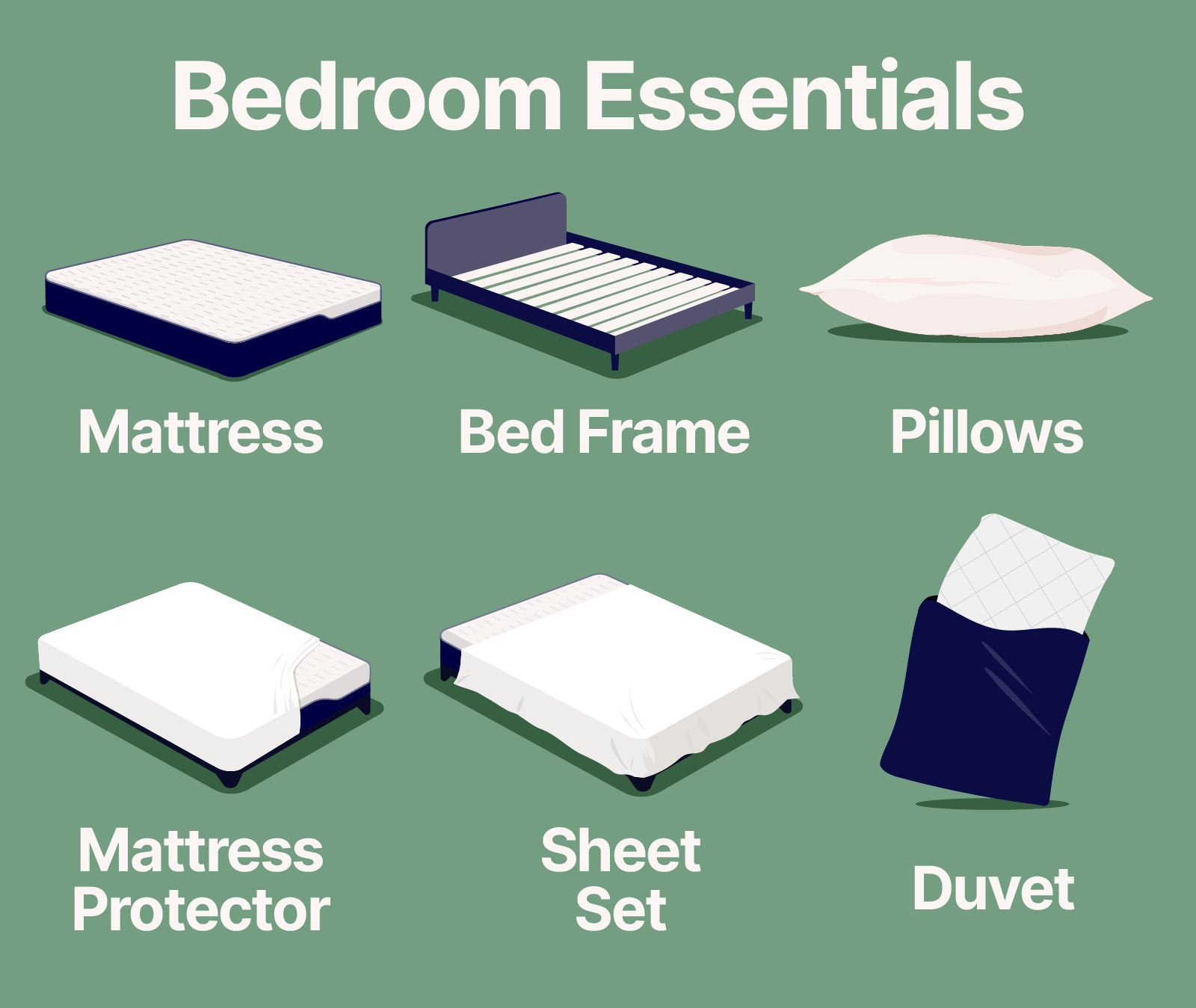
The Complete Bedroom Essentials Checklist
Mattress
When deciding what to buy for your bedroom, a good mattress can be one of the most important investments you make. We spend about one-third of our lives sleeping. The right mattress isn’t just a piece of furniture; it’s a factor in your health (both physical and mental), your productivity, and your overall well-being and recovery.
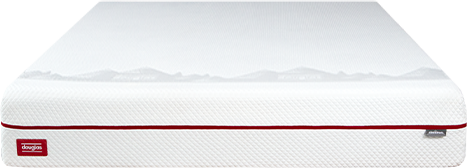
Based on third-party engineer tests, we recommend checking out Canadian brands like Douglas and Logan & Cove. Both brands offer high-quality mattress options that don’t break the bank and offer at-home sleep trials, so you don’t have to worry about making a pricey mistake.
Logan & Cove and Douglas each offer a lengthy 365-night sleep trial with their mattresses. This means you can try the mattress at home across multiple seasons before deciding whether it’s right for you. If it’s not the perfect fit, return the mattress for a hassle-free refund (they’ll even come pick it up).
READ MORE: Our top-rated mattresses in Canada
Mattress Protector
A mattress protector is another important bedding item to get right at the beginning of your move. While it’s an easy item to forget, a good mattress protector will shield your mattress from spills, stains, avoidable wear and tear, sweat, pet accidents, and more.
Some companies, like Douglas, send out a free mattress protector with their mattress, so you don’t have to worry about buying one separately. However, if you choose a brand that doesn’t include one, it’s a good idea to purchase one yourself to extend your mattress’s lifespan.
Pillows
Pillows are essential for sleep comfort. They help keep your neck in line with your spine while you sleep. While there are many pillow options available in the market, different pillow types can suit different sleeping positions.
- For Back Sleepers: A medium loft pillow can support your head without extending your neck, such as a memory foam pillow or down alternative pillows.
- For Side Sleepers: A high loft pillow fills the shoulder gap to avoid your head hanging too low, such as an adjustable memory foam pillow, a latex pillow, or a down pillow.
- For Stomach Sleepers: A low loft pillow prevents your neck from straining too much, such as a down pillow, an adjustable memory foam pillow, and cotton pillows.
If you’re on a budget, some mattress brands include free sleep accessories with their mattress. For instance, Douglas mattresses come with a full bedding bundle, which includes pillows (and pillow protectors). This is a great way to save on moving costs and get a sleep-ready mattress set in one order.
Skip the mattress-shopping hassle.
Shop Douglas and get a free bedding bundle that includes all your bedroom essentials, for better sleep from night 1.
Shop Now
Sheet Set
Sheets are another non-negotiable when it comes to bedroom essentials. While there are many different material options to choose from, common choices include cotton (soft and breathable), bamboo (cooling and hypoallergenic), and microfibre (affordable but can trap heat).
Sheet set prices can vary widely, but affordable sets aren’t hard to find. Many home goods brands offer sales during popular shopping periods such as Black Friday, Canada Day, and Boxing Day. You can opt to wait for these periods to save money if you’re on a budget.
For even more savings, you can purchase a mattress that comes with a free sheet set. For example, the Logan & Cove mattress comes with a free bedding bundle that includes a full bamboo sheet set.
READ MORE: Best Material for Bed Sheets
Duvet or Blanket
An insulator on top of your flat sheet is important to keep you warm as your body temperature drops during the night.
Common duvet types include down duvets and down-alternative duvets. While down duvets can be more expensive, they remain warm yet breathable and help regulate temperature at night. Down alternative duvets are a more affordable option and are also suitable for sensitive skin or vegan sleepers.
READ MORE: Duvet vs Comforter
Bed Frame
After your mattress, a quality bed frame will be the next high-ticket item needed to complete your bed setup. Some mattress foundations can be pricey, although certain Canadian brands like Douglas aim to make great sleep more accessible with affordable bed frame options.
While it’s ideal to use an appropriate bed frame to support your mattress right away, if a frame purchase doesn’t fit into your move-in budget, you can typically get away with placing your mattress on the floor for a short period of time. However, to avoid moisture buildup, consider propping your mattress up against a wall when not in use to prevent mould and mildew.
Eventually, however, it’s a good idea to invest in a bed frame that’s compatible with your mattress. Many mattress manufacturers stipulate that their mattresses be used on supportive frames (meeting specific requirements) to keep the warranty intact. Platform beds and upholstered bed frames with slats are popular options because of their strength and simplicity.
READ MORE: How to Choose a Bed Frame
Brands like Juno and Douglas have portfolios that span the whole bedroom set:
- Mattresses
- Bedding bundles with all the necessary sleep items like pillows, sheets, and mattress protectors
- Bed frames, which are often discounted when bought as a bundle with a mattress, combining savings and convenience
This way, you have everything you need in one easy purchase, and save on accessories. You can also enjoy free shipping to most locations with these brands, so no need to worry about expensive delivery fees.
How to Pick a Bed
How to Choose the Right Bed Size for Your Room
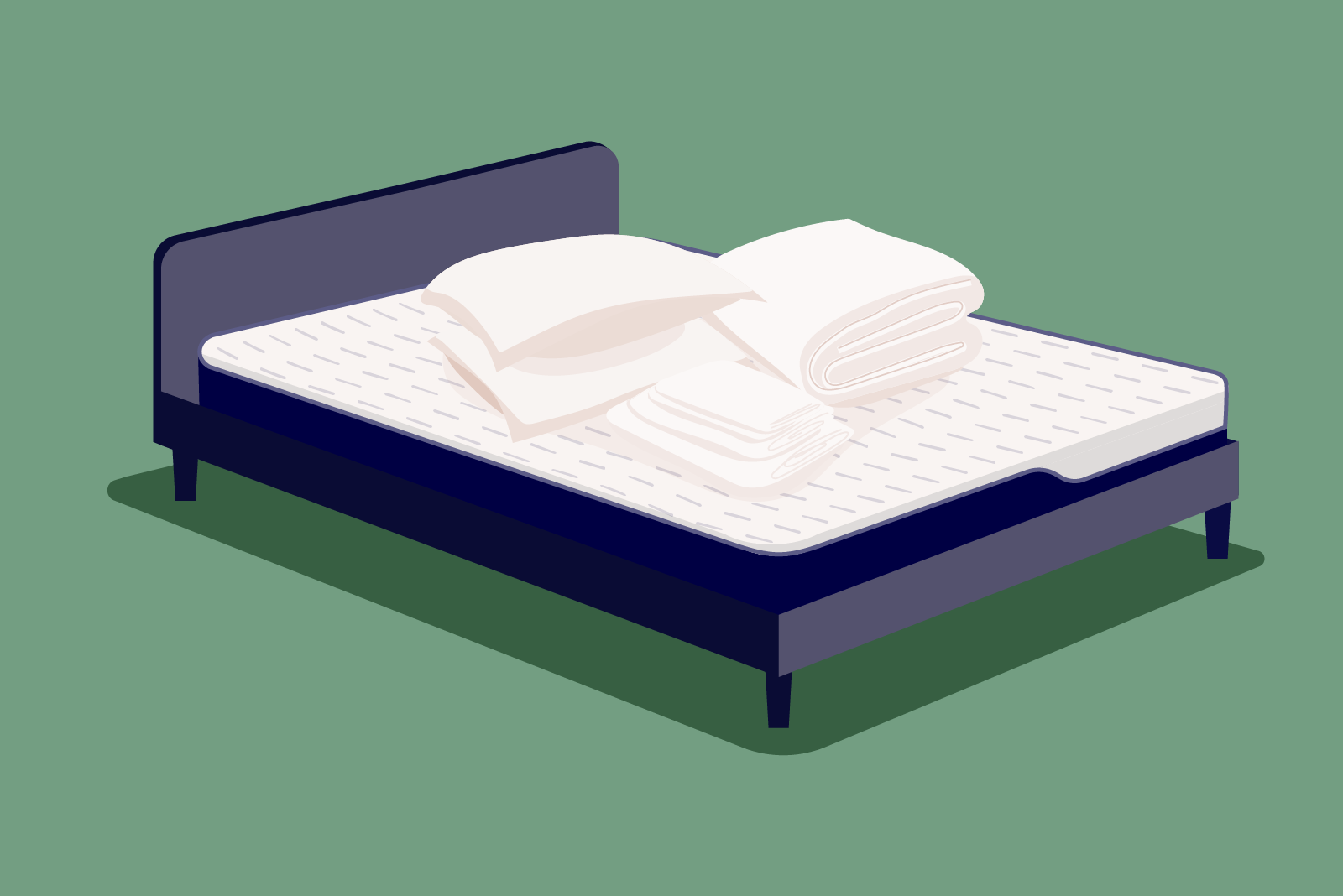
There are some factors to consider when choosing a bed setup. You want to choose a mattress size that not only fits your needs, but also fits your room size. If you share a bed but have a smaller room, you may be better off choosing a queen size instead of a king, giving you more room for other furniture and to move around.
The average Canadian bedroom is 10×12 ft, which comfortably fits any mattress size up to a queen size. Some primary bedrooms measure 12×12 ft, which is the minimum required space needed for king and California king size beds to fit adequately.
Which Mattress Type Is Right for You
There are different mattress types: foam, hybrid, latex, innerspring, just to name the common ones. If you’re not sure about the mattress type that would fit you, a good first step is visiting your local mattress store and trying out some different mattresses to see what you prefer. Here’s a quick breakdown of the most common mattress types:
- Poly/Memory Foam: These mattresses combine different layers and densities of foam to provide pressure relief, cushioning, and support. Some mattress brands like Douglas incorporate specialty foams like gel-infused foams to help keep the mattress cool and temperature-regulated. Generally, foam mattresses provide great pressure relief and a less responsive mattress surface.
- Innerspring: This might be the type of bed that pops into your head when you first picture a mattress. This traditional mattress design features a set of coils and a thin comfort layer on top, which can be made of foam or fibre padding. These mattresses are often found in big-chain mattress showrooms, can be very bouncy, and typically don’t offer as much pressure relief as more modern mattresses.
- Hybrid: As the name suggests, hybrid mattresses combine the comfort of foam with the responsiveness of coils, giving you the best of both worlds. Hybrid mattresses can sometimes be more expensive, but there are many accessibly priced options in the market, such as Juno Hybrid, which starts at $549.
- Latex: A type of open-cell foam, latex mattresses can be made from either natural latex (made from rubber) or synthetic latex. These mattresses can be very durable, but are heavy and very responsive. They also tend to be more expensive than poly foam mattresses.
How Much Should You Spend on a Mattress in Canada
A good quality mattress can cost around $500-$2000 for a queen-size mattress, depending on what you’re looking for.
- Budget: If you want a mattress that provides good support without breaking the bank, consider a value brand mattress such as Juno.
- Mid-range: If you have a little more room in your budget and want more features in your mattress, a brand like Douglas can be a good option.
- Premium: If you want a luxury experience at an accessible price, you should look at a brand like Logan & Cove.
You’ll also want to consider the cost of a compatible bed frame. You can typically expect to spend between $250 and $1,500 for a queen-size frame. A simple yet effective frame to consider is the Douglas Platform Bed, at $399 for a queen size. Additionally, if you bundle it with a Douglas mattress, you’ll receive a discount on your frame for even more savings.
Want a supportive bed frame that doesn’t break the bank?
Save on the Douglas Platform Bed when you bundle it with your mattress.
Shop Now
Whether you want to buy a mattress in person or online, there are pros and cons to both options.
READ MORE: Best Online Mattresses in Canada
Typical Bedroom Dimensions: Planning Your Space
Standard Bedroom Sizes in Canada
Before choosing a mattress and bed frame, take a close look at your space to ensure everything can fit comfortably. As a general rule, aim for at least 24 inches of clearance on each side of the bed for comfortable access, and at least 36 inches at the foot of the bed.
How to Make a Small Bedroom Feel Bigger
- Choose a smaller bed size: If you’re sleeping on your own, you can opt for a smaller bed size, like a twin or full size, to save floor space. When a bed setup is too big, the room can feel claustrophobic and small, so work with your room size to create a comfortable space.
- Get a multi-functional bed frame, storage, or a loft bed: You can maximize storage space by getting a bed frame with built-in storage. Lofted beds are another great solution for small apartments, as they create space under the bed for extra seating, storage, or a desk.
- Maximize vertical space: Ceiling-height wardrobes and tall bookshelves are underutilized in small bedrooms. By extending your storage all the way to the ceiling, you can maximize your usable square footage without crowding the floor.
- Use floating shelves to save space: Floating shelves, either above the bed or around the bedroom, are a simple, affordable way to add storage without taking up floor space.
- Use softer colours for walls or wallpaper: Light neutral colours for wall paint or wallpaper can help make the space feel light and airy, as they reflect light and make the room feel bigger to the eye.
- Add reflective surfaces: Mirrors reflect and bounce natural light throughout the room, creating an optical illusion that extends sightlines. This can make a room feel much bigger than it actually is.
What Direction Should a Bed Face?
Ancient practices like Feng Shui in China and Vastu Shastra in India focus on architectural traditions to better align with natural forces and balance the energy of a space through the placement of furniture and design elements for optimal health and wellness. They dictate things like the best direction to sleep in or the best position to place your bed.

According to both practices, the best direction to place your head is towards the south. Feng Shui believes that facing southwards when sleeping promotes the flow of positive “chi” (or energy) by corresponding with the earth’s electromagnetic fields, while Vastu Shastra believes that south-facing sleep aligns with the earth’s magnetic field to promote better and deeper sleep, reduce stress, and bring about better energy and wealth.
If your room layout doesn’t allow for south-facing placement, like many apartments, Feng Shui’s secondary recommendation is east-facing, which inspires better health and concentration.
Here are 6 more tips to optimize your space according to Feng Shui:
- Place your bed in a commanding position so you can see the main entryway to the bedroom when you sit up against your headboard, but avoid placing it directly in line with the doorway.
- Get a bed frame with a solid headboard that rests against a wall, which Feng Shui experts believe helps you feel more supported and grounded, bringing out a sense of stability.
- Avoid placing mirrors directly across from your bed; instead, place them on side walls or reflect uplifting scenes, such as a piece of artwork or the window.
- Choose calming colours, such as neutrals and natural hues (beige, cream, light green, light blue), for wall paint colours, design elements, and bedding, to promote a sense of calm and relaxation.
- Choose bedding carefully. Feng shui experts say to use high-quality materials, like Egyptian cotton and linen, which are breathable materials derived from natural materials and plants.
- Avoid storing too much underneath the bed to allow for the flow of energy and airflow. If you must store items underneath your bed because of restricted space, store things that are related to sleep or textiles, like extra bedding, towels, and pillows, and not high-energy items such as books (represent restless thoughts), workout equipment (represents “working” energy instead of “resting” energy), or shoes (represent “aggressive” energy from the outside).
Frequently Asked Questions
What do I buy for a new bedroom?
The single most important purchase for a new bedroom is a quality mattress and bed frame, since sleep is the primary function of a bedroom. The most essential list of bedroom items for a new home is as follows:
- Supportive mattress
- Bed frame
- Bedding: sheets, pillows, mattress protector, duvet/blanket
- Curtains for privacy and aiding in sleep
- Storage options like shelves/dressers
When you’re planning to move, it’s important to create a new home essentials checklist for each room so you can effectively budget for what you need vs. what you want (e.g., non-essentials like decor and artwork), since moving to a new place can be costly.
Bedroom sets like the Upholstered Bed Frame + Mattress Bundle from Douglas can help cut costs and decision fatigue and provide you with everything you need for your first night’s sleep in your new space, hassle-free.
What should every bedroom have?
Every bedroom should ideally have the following items to be optimally functional and comfortable:
- Supportive mattress
- Supportive bed frame
- Comfortable bedding (sheets, pillows, blankets/duvets, mattress/pillow protectors, etc.)
- Nightstands for bedside storage
- Dresser/Closet for storage
- Vanity area
- Curtains/window coverings for privacy and to block out light to aid sleep
- Full-length mirror
- Ambient lighting (e.g. bedside lamps, floor lamps)
- Decor and plants to personalize your space
Do I need a bedroom furniture set?
No, you don’t need to purchase a complete bedroom furniture set, which typically includes a bed frame, nightstands, and dressers that all match in style and design. While buying a set can create a cohesive look and offer a quick solution to furnish your space, cost savings don’t always exist, and it may not result in the most visually interesting or appealing design.
Instead of sticking to matching furniture, consider selecting complementary pieces. For example, you might choose matching nightstands while opting for a different bed frame or dresser. This approach adds variety and visual interest, allowing your space to feature different tones and colours that draw the eye.
What’s the best mattress for a new home?
We think Douglas is a good choice for a new home mattress. Based on over 40 criteria we look at, Douglas balances price, comfort, support, strong purchasing policies, and is proudly Canadian made.
- If you prefer a foam mattress, the Douglas Original is a good option, with excellent motion isolation and very good edge support, cooling features like a cooling cover and cooling gel foam, and a free bedding bundle with purchase, which includes a cotton sheet set, a duvet cover, a down alternative duvet, pillow(s), pillow protector(s), and a mattress protector.
- If you prefer a hybrid mattress, you can also look at the Douglas Original Hybrid, which performed similarly well and includes zoned support coils for bounce and breathability.
How do I move a mattress upstairs?
Moving a mattress upstairs can be challenging, so it’s important to take precautions to avoid injuries. Make sure you get help from a friend, use proper lifting techniques, and clear a path ahead of time to ensure the process is both safe and manageable.
READ MORE: How to move a mattress
How do I make a new bedroom cozy?
You can make your bedroom cozy by elevating your bedding, focusing on ambient lighting, and organizing your space to remove visual clutter.
- Better bedding: Use a cozy textured blanket, a long pillow, or a couple of throw pillows to make your bed feel inviting.
- Softening window treatments: Install floor-to-ceiling neutral-colored curtains to soften the room, allow filtered light in, and elegantly frame the windows.
- Ambient lighting: Opt for bedside lamps with warm light bulbs to add warmth to the room rather than relying solely on bright overhead lighting.
- Reduced visual clutter: Choose furniture with built-in storage to conceal unsightly items like wires and small knick-knacks. Having designated storage areas can help the room feel organized and more spacious.
Ready to shop? Let MattressReviews.ca help.
Our goal is to provide the information you need to find the mattress that’s right for you. Get started with some of our most popular mattress shopping resources:
We use independent, third-party engineering firms (commissioned by us) with the APEGA stamp of approval to conduct mattress testing on our behalf, using publicly available data. We review and test all mattresses on 40+ criteria we think are important to you, including price, country of manufacture, sleep trial, warranty, features, materials used, motion isolation and edge support ratings, customer satisfaction reviews, returns, and refunds.