Foam vs Hybrid Mattress: Which Mattress Type Should You Choose? (2026)
Updated: September 1, 2026
-
Written by
Alexandra
Forest
Sleep Content Specialist
When it comes to choosing a new mattress, the decision between a hybrid mattress vs foam can be daunting. Both offer unique benefits and cater to different sleep preferences.
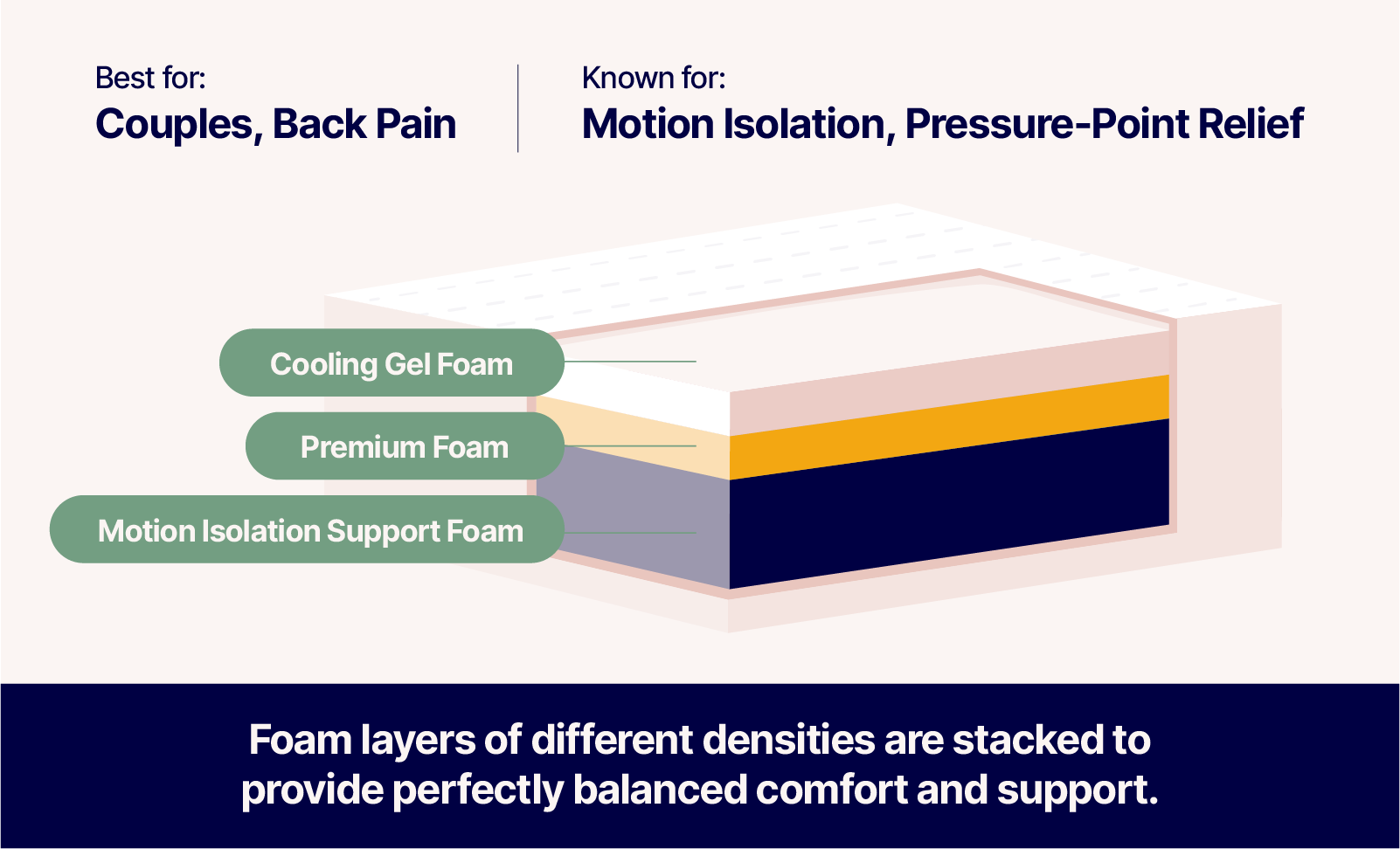
Foam mattresses, constructed solely from foam layers, provide excellent motion isolation and pressure relief, making them ideal for light sleepers or those who want more cushioning around pressure-sensitive areas. On the other hand, hybrid mattresses combine foam layers with coil systems, offering a balance of support, breathability, and bounce.
Neither type is automatically better. Your best choice depends on your sleep needs and how much you want to spend. Below, we compare the differences and recommend a tested option from each category to help you make an informed decision.
You want the best motion isolation & pressure relief, sleep alone or with a restless partner, or want to spend less.
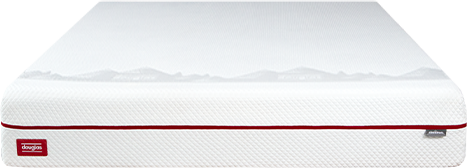
Our pick: Douglas Original
- 365-night sleep trial and 15-year warranty
- Excellent motion isolation
- Cooling gel foam comfort layer
You want more bounce, stronger edge support & cooler airflow, or you’re a heavier or combination sleeper.
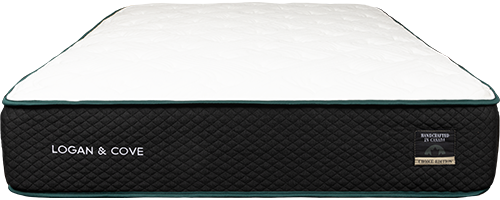
Our pick: Logan & Cove Choice
- 365-night sleep trial and 15-year warranty
- Zoned support and advanced cooling features
- Free bedding bundle with purchase
Breakdown: Hybrid vs Foam Mattress
The right choice comes down to priorities: motion isolation and contouring usually favour foam, while cooling and responsiveness favour hybrid. The comparison below breaks down both constructions across various performance factors to help identify which aligns with your sleep needs.
Compare the Best Foam Mattresses Compare the Best Hybrid Mattresses
Which mattress type is right for you?
Foam Mattresses
Foam mattresses like Douglas, Octave, and Juno offer several advantages, including better motion isolation and superior pressure-point relief compared to many hybrids. They also come in a wide range of foam types to suit different preferences.
Foam Mattress Materials
Foam mattresses typically feature multiple layers of foam, including memory foam, gel foam, poly foam, or latex foam.
- Poly foam typically offers excellent support and breathability. It can also have widely different firmness levels, depending on foam density. Poly foam can be less expensive to produce than other types of foam, so it’s often used in affordable mattresses.
- Memory foam adapts to different amounts of pressure and contours to the body’s shape, letting you sink into the mattress somewhat. This can create a “hugging” effect while you’re lying down. You may notice heat trapping in closed-cell memory foam, but open-cell foam (and advanced cooling features) help increase airflow.
- Gel foam is a variation of memory foam that uses gel to move heat away from your body while you sleep. The gel can be infused or layered on top of the foam, depending on the manufacturer. The result is usually a cooler sleep that allows you to still enjoy all the body-contouring benefits of memory foam.
- Latex foam, which can be natural or synthetic, provides a responsive feel and better temperature regulation than other types of foam due to its open cell structure. This type of foam is long-lasting and can be more expensive than other foams, but it’s often worth the investment.
READ MORE: Get our ranked list of the best memory foam mattresses
Some foam mattresses also include extra cooling features to prevent heat trapping and ensure a comfortable, more refreshing night’s sleep. For example, Octave Vista, our pick for best cooling mattress, comes with a cooling nanofibre cover to pull sweat away from your body, copper-infused memory foam treated with phase-change material for temperature balance that adapts to temperature fluctuations, and multi-zone support foam with breathable air channels for air circulation.
Foam Mattress Pros & Cons
Hybrid Mattresses
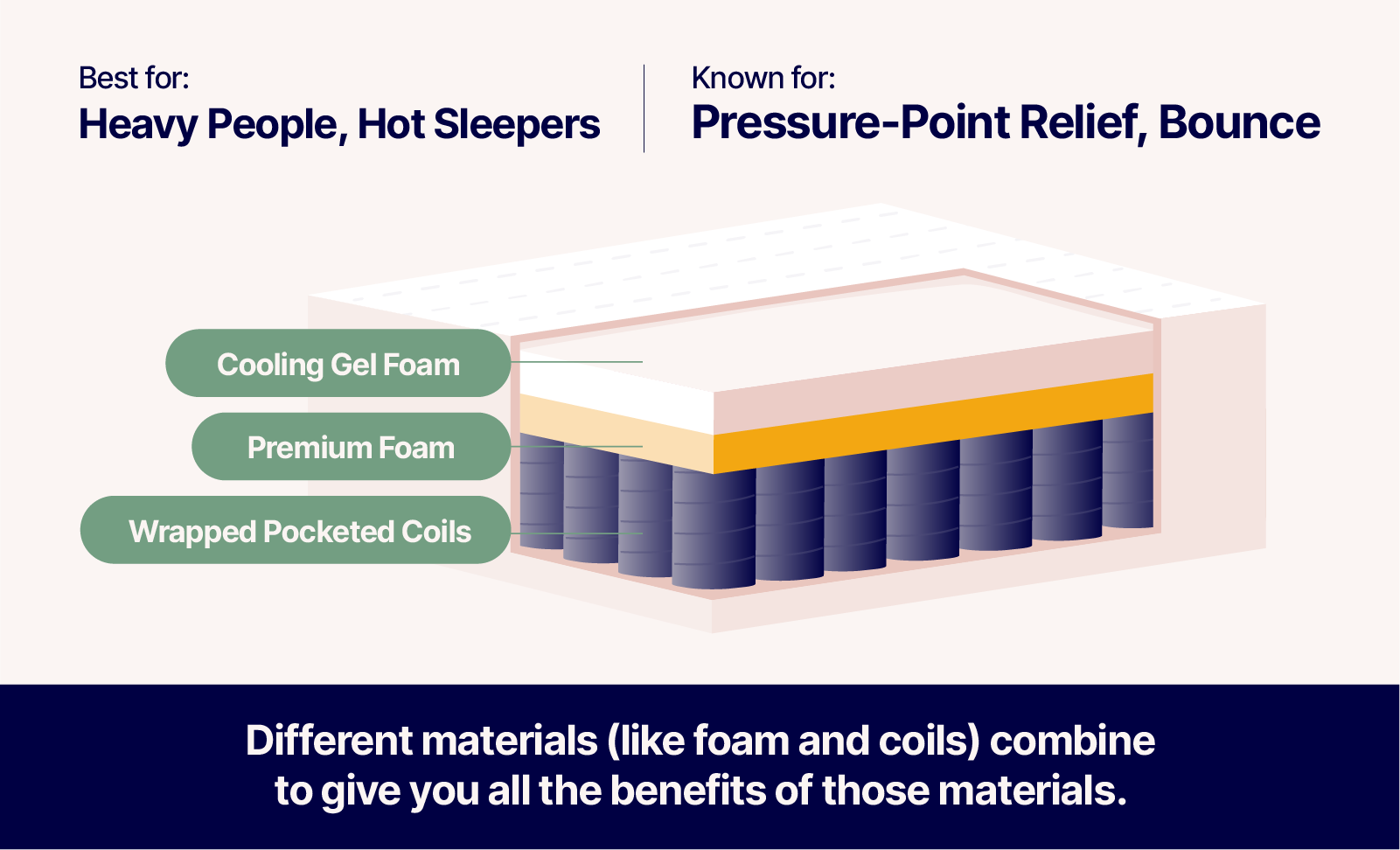
Hybrid mattresses like Logan & Cove combine foam comfort layers with coil support systems to offer a balanced sleep experience. They provide a balanced feel with a combination of foam contouring and coil support, paired with durable construction and enhanced breathability.
READ MORE: Hybrid mattress vs memory foam
Hybrid Mattress Materials
Hybrid mattresses use inner coils, often made of steel, combined with at least one layer of foam that’s at least 2″ thick. Often you’ll find several foam layers and multiple coil layers, especially in quality hybrids like Logan & Cove Frontier.
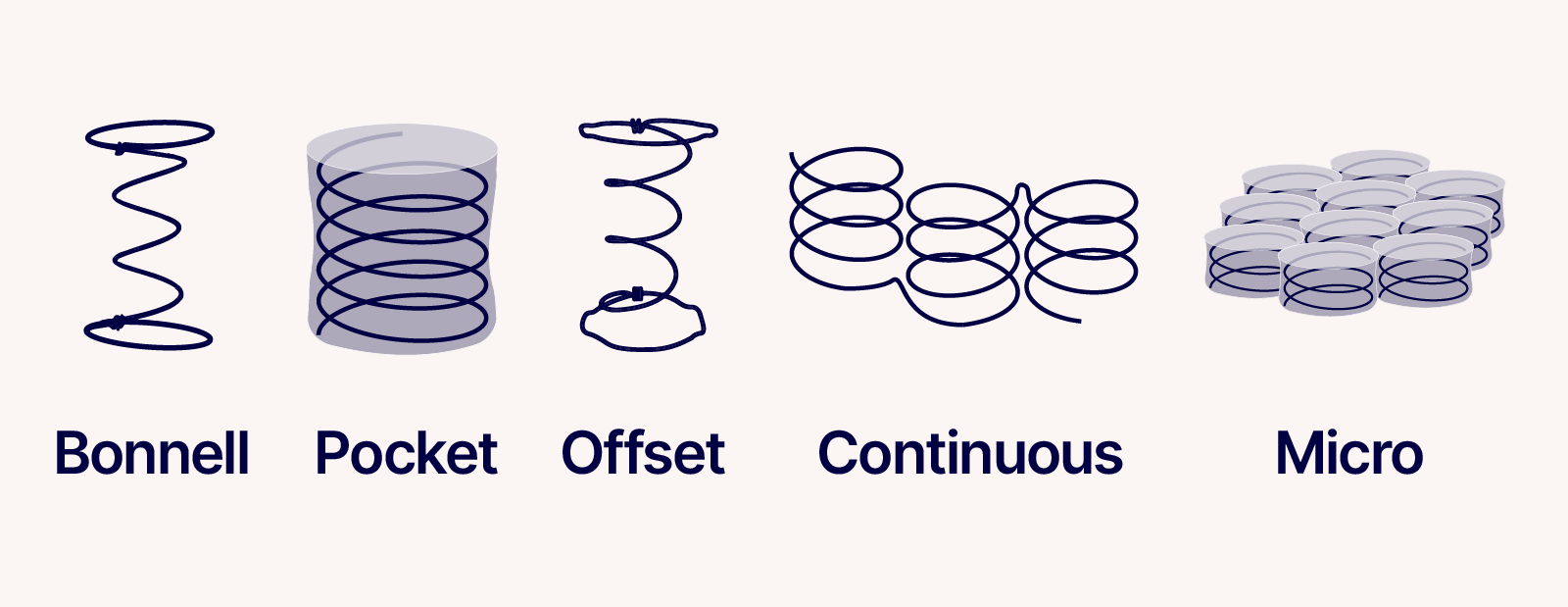
We have already explored different types of foam in this article, such as memory foam, latex foam, and poly foam. Let’s go over the different types of coils you might see in a hybrid mattress.
- Bonnell coils are shaped like an hourglass and typically wired together to form a single unit. They’re less durable, supportive, and motion-isolating than other coil types.
- Pocket coils are individually wrapped in fabric and operate independently, making them whisper-quiet and excellent at contouring to your body.
- Micro coils are similar to (and often paired with) pocket coils, but much smaller. This type of coil provides added contouring and responsiveness.
- Offset coils are interconnected like Bonnell coils but not as rounded, and they have better motion isolation and support.
- Continuous coils are rows of circular connected wires. They’re durable, but they don’t provide good motion isolation, are less comfortable to sleep on, and are fairly noisy.
Hybrid Mattress Pros & Cons
Should you choose a foam mattress vs hybrid mattress?
A foam mattress is likely the better fit if you want less motion transfer, lower bounce and a more contouring feel. It can be especially useful for couples when one person frequently changes position or gets out of bed during the night.
A hybrid may suit you better if you sleep warm, prefer more responsiveness or want added support around the mattress perimeter. Pocket coils can improve airflow and make it easier to change positions without giving up the cushioning of foam comfort layers.
For a tested Canadian foam option, consider Douglas Original. It combines excellent motion isolation with very good edge support and costs $799 for a queen.
For a more responsive hybrid mattress with pocket coils and zoned support, consider Logan & Cove Choice. It costs $1,199 for a queen and includes cooling features, a plush quilted cover and reinforced edges.
Both mattresses come with a 365-night sleep trial and 15-year warranty, giving you time to determine which option works better for you at home.
READ MORE: How to choose a mattress
Ultimately, consider your unique sleep needs and preferences when choosing between these two popular mattress types to ensure a restful night’s sleep.
Frequently Asked Questions
Is a foam or hybrid mattress better?
Neither construction is universally superior—the right choice depends on which factors matter most to you. Foam typically performs better for motion isolation, pressure relief, and affordability. Hybrids typically perform better for airflow, edge support, and bounce. For most solo sleepers and couples, our testing points to Douglas Original as a strong all-around foam pick. For shoppers who prioritize coil-based responsiveness, Logan & Cove is a stronger hybrid option.
Are hybrid mattresses worth the extra money?
It depends on what you’re prioritizing. If temperature regulation, edge support, or a more traditional mattress feel are important to you, the added cost of a hybrid construction is often justified. If those factors aren’t a concern, a well-built foam mattress can deliver comparable pressure relief and motion isolation at a lower price point.
Do foam mattresses sleep hot?
Foam can retain more heat than hybrid constructions, since it lacks the airflow that coils provide. However, cooling covers and open-cell foam layers are designed to offset this, and heat retention varies significantly by model. If temperature regulation is a top priority, our testing generally favours hybrid constructions or foam models specifically built with cooling layers, such as Octave Vista.
Which lasts longer, foam or hybrid?
Durability depends more on foam density and coil quality than on construction type alone. High-density foam mattresses can hold up as well as hybrids over time, but lower-density foam is more prone to premature sagging. Hybrids often have an advantage in edge retention since coils resist compression differently than foam, but they introduce more components, like coil connectors, that can wear or loosen over years of use.
Both of our top picks, Douglas for foam and Logan & Cove for hybrid, come with a 365-night sleep trial and a 15-year warranty.
Is foam or hybrid better for back pain?
Neither construction is inherently better for back pain. Support comes down to how well a mattress matches your firmness needs and sleep position, not whether it’s foam or hybrid.
Research suggests medium-firm mattresses are generally associated with improved comfort for people with low-back pain, though individual results vary. If back pain is a primary concern, we recommend speaking with a healthcare provider about your specific needs, and looking closely at firmness and support layer construction rather than category alone.
So which specific mattress should I buy?
Your best fit depends on how you sleep and what you value most:
- All-around foam pick: Douglas Original—Douglas Original balances contouring and support across a range of sleep positions, which is why it holds up as a strong default recommendation for most solo sleepers and couples.
- Hot sleepers: Octave Vista—Octave Vista’s cooling-focused layers address heat retention more directly than standard foam, making it a stronger option if temperature regulation is your top concern.
- Hybrid/bounce preference: Logan & Cove—Logan & Cove’s coil-based construction adds responsiveness and edge support that foam can’t quite replicate, appealing to shoppers who want a more traditional mattress feel.
- Value-focused foam pick: Juno—Juno delivers solid pressure relief and motion isolation at a lower price point, making it a practical choice for budget-conscious shoppers who don’t want to compromise on core comfort.
Ready to Choose?
Start with the criteria you notice most at night, movement, warmth or mattress feel, and choose the option designed around it
Compare Mattresses
The information and content published on MattressReviews.ca are provided for general informational purposes only. All reviews, comparisons, and product details reflect our independent evaluations (combined with commissioned third-party testing) based on mattress models that we personally purchased and tested.
Product review details reflect the product as it existed at the time of review.
Product price, design, materials, and availability may change over time. For transparency, the purchase date is available on our disclaimer page purchase timeline or mentioned in the article.
The “Updated” label may reflect editorial or SEO updates only and does not indicate a change to the product data.
Unless otherwise noted, the “made in” or country-of-origin details apply only to the specific product we received and do not reflect the brand’s full manufacturing footprint.
More details >