How to Sleep Better as a Couple: Common Struggles and Solutions (2026)
Published: March 10, 2026
Picture this: You get into bed with your significant other, child, or a pet, hoping to get a great night of sleep. But instead, you’re kept awake by movement, heat, or noise. Sound familiar? You, like many other people sharing beds, might not be getting optimal sleep, which can impact your overall sleep quality and health.
According to a research study, the duration and quality of an individual’s sleep are impacted and can be predicted by their partner’s sleep habits. Another study shows that, out of 85% of individuals reporting sleep struggles, 40% of the time, it’s due to a partner tossing and turning throughout the night.
Losing sleep can be frustrating, leaving you feeling groggy and irritated the next day, or even the next week. Luckily, there are some tips and tricks to sleeping better with a partner that we’ll outline in this article. Keep reading to learn more.



Why You Might Sleep Worse with a Partner
Sleeping is a personal experience. That said, many sleepers share a bed with another person, which can directly affect individual sleep quality. Sharing a bed can be challenging for reasons like differences in bedtimes, bedding preferences, and sleep habits like snoring or restlessness. It can also lead to partners compromising on the things that help them sleep restfully.
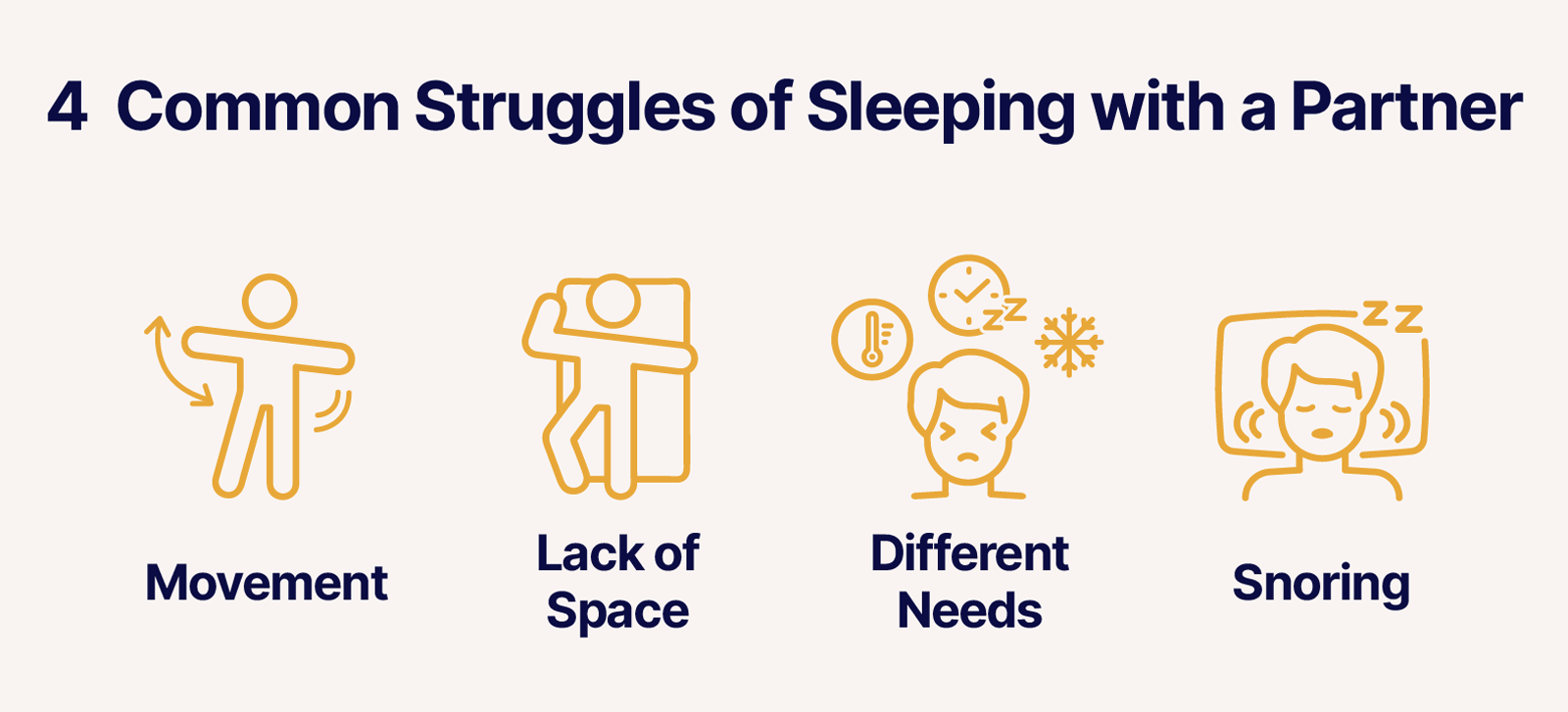
1. Woken Up by Movement
One of the culprits of sleep loss when sharing a bed with someone is movement from the other side of the mattress. This can look like one partner tossing and turning or getting in and out of bed throughout the night, leading to movement that wakes the other up—especially if the other partner is a light sleeper.
This is particularly pronounced in mattresses with poor motion isolation. One partner’s movement can transfer across the bed, potentially shaking the other and waking them up. This is one reason foam mattresses became so popular among couples: their ability to absorb excess motion transfer, limiting disturbances and helping couples sleep more soundly.
2. Lack of Space
If you find yourself bumping into your partner too often, or waking up near the edge of one side of the bed, you might not have adequate space on your mattress. While the most common mattress size in Canada is a queen, some couples find that it still isn’t enough room to spread out or sleep comfortably. Couples sharing even smaller mattress sizes, such as a twin or double mattress, are likely to experience this to an even greater degree.
READ MORE: What mattress size is best for you?
3. Difference in Sleep Needs
There are many factors and needs that impact one’s sleep quality, which can vary widely from person to person. Two partners who share one bed can have mismatched sleep needs, and compromises made can negatively affect the sleep quality of both.
Common sleep needs for most people include a comfortable room temperature, bedding that supports temperature regulation, a quiet environment, and a mattress that feels both comfortable and supportive. Preferred couples’ sleeping positions might vary as well. It can be a challenge to agree with your partner on every one of these counts. This can lead to one or both partners compromising on the things that help them sleep restfully.
4. Sleeping with a Snoring Partner
Learning how to sleep with a snoring partner can be one of the biggest challenges of sharing a bed. Not only can the sound and vibration of one partner snoring wake the other, but the snorer’s sleep may also be suffering. Snoring can disrupt sleep cycles, prevent deep sleep, or indicate conditions like sleep apnea. Sleep apnea can cause you to wake up or experience sleep disruptions between 5 and 30 times per hour.
Some couples try to limit snoring and its disruptive effects by using a bed frame that elevates the head, like an adjustable mattress base. However, if you find that snoring is causing frequent nighttime disruptions, consulting a medical professional to find any underlying causes can be beneficial for both partners.
Benefits of Sleeping Alone vs With a Partner
Although sharing a bed can come with challenges, it may also offer some proven benefits.
Benefits of Sleeping With Partner | Benefits of Sleeping Alone |
|---|---|
Lowered depression & anxiety | Manage different sleep schedules |
Greater relationship satisfaction | Fewer nighttime disruptions |
Better sleep quality | Avoid sleep-related arguments |
Benefits of Sharing a Bed
Some reasons why sharing a bed can be beneficial include:
- Lowered depression and anxiety levels. Certain studies have shown that sleeping beside a partner is associated with lower levels of stress, depression, and anxiety, as well as lower cortisol levels.
- Higher relationship satisfaction. Being able to wake up next to your partner and therefore experience more “sleep-touch” is reported to lead to happier and less irritable mornings, as well as more positive interactions with your partner.
- Better sleep quality and mood regulation. Sharing a bed has been studied as a factor in getting more REM (rapid-eye movement) sleep, the phase of sleep that supports learning, brain development, and mood regulation.
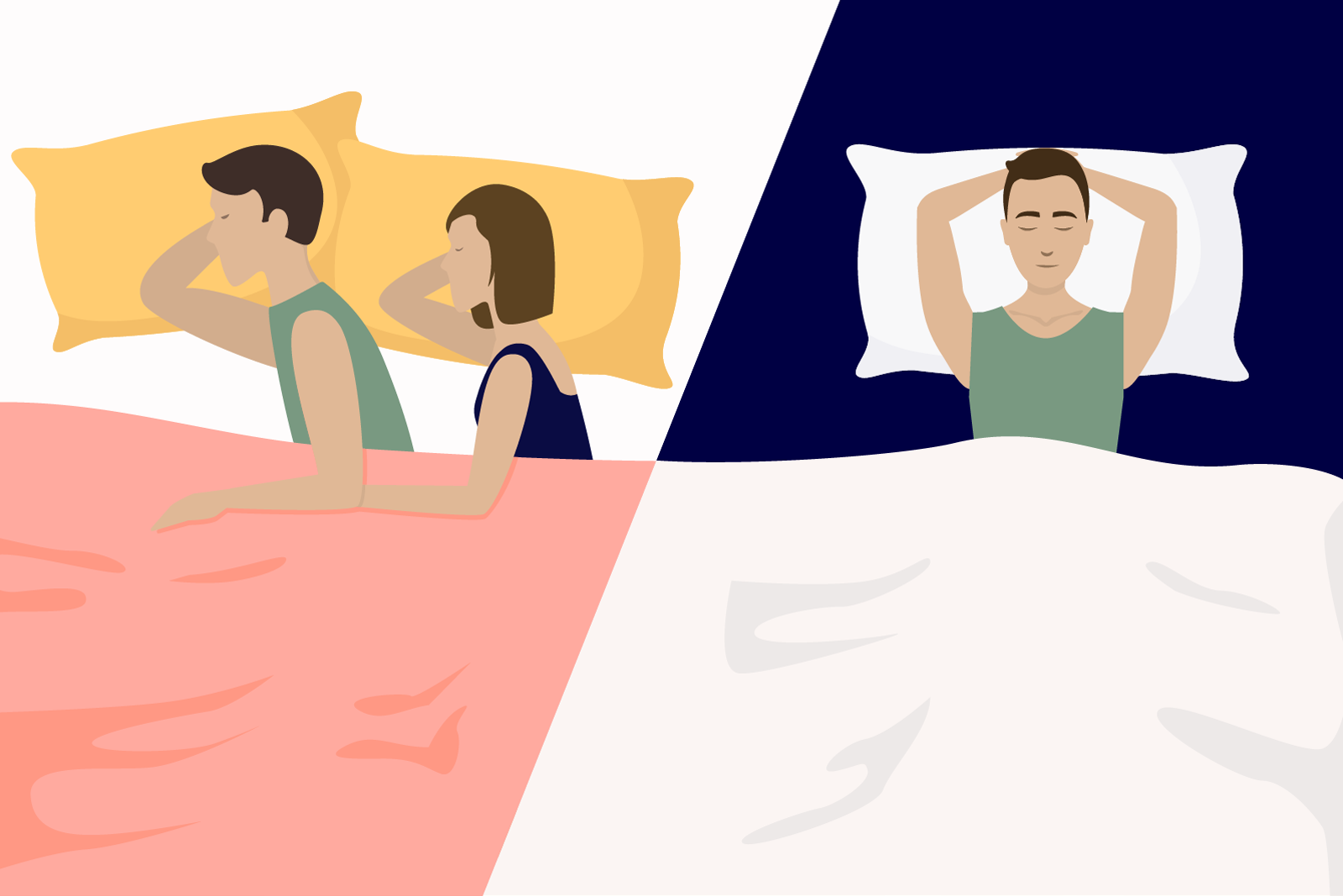
Benefits of Sleeping Alone
While there are some proven benefits to sleeping beside a partner, child, or pet, there are also some reasons why sleeping alone can be a better choice, such as:
- Managing different sleep schedules. If one partner gets in or out of bed at different times—whether due to being an early riser, a night owl, or having daily obligations like a night shift job—the other partner may be disturbed by their movements. This can especially be a challenge if the other partner has trouble falling back to sleep, and can affect the amount of deep sleep they get throughout the night.
- Experiencing fewer nighttime disruptions. Disruptions, both environmental (such as room temperature) and those caused by your partner (such as noise and movement), can make it uncomfortable for one or both partners to get a good night’s sleep.
- Avoiding arguments caused by loss of sleep. If you or your partner is struggling to sleep, especially if one suffers from a sleep disorder, it’s likely taking a toll on your physical health, which can lead to emotional distress in the relationship. Irritability from lack of sleep can lead to more arguments, and it can make you and your partner play the “blame game” over sleep disruptions.
The ability to get a good night’s sleep with a partner depends on each person’s sleep needs and how well they align. While there are factors beyond your control, such as your preferred sleeping temperature compared to your partner’s, there are several tips you can try to optimize sleep quality for both of you.
Tips to Sleep Better with a Partner
If you or your partner has been struggling with sharing a bed and you’re ready to reclaim your sleep, here are some tips and techniques to try.
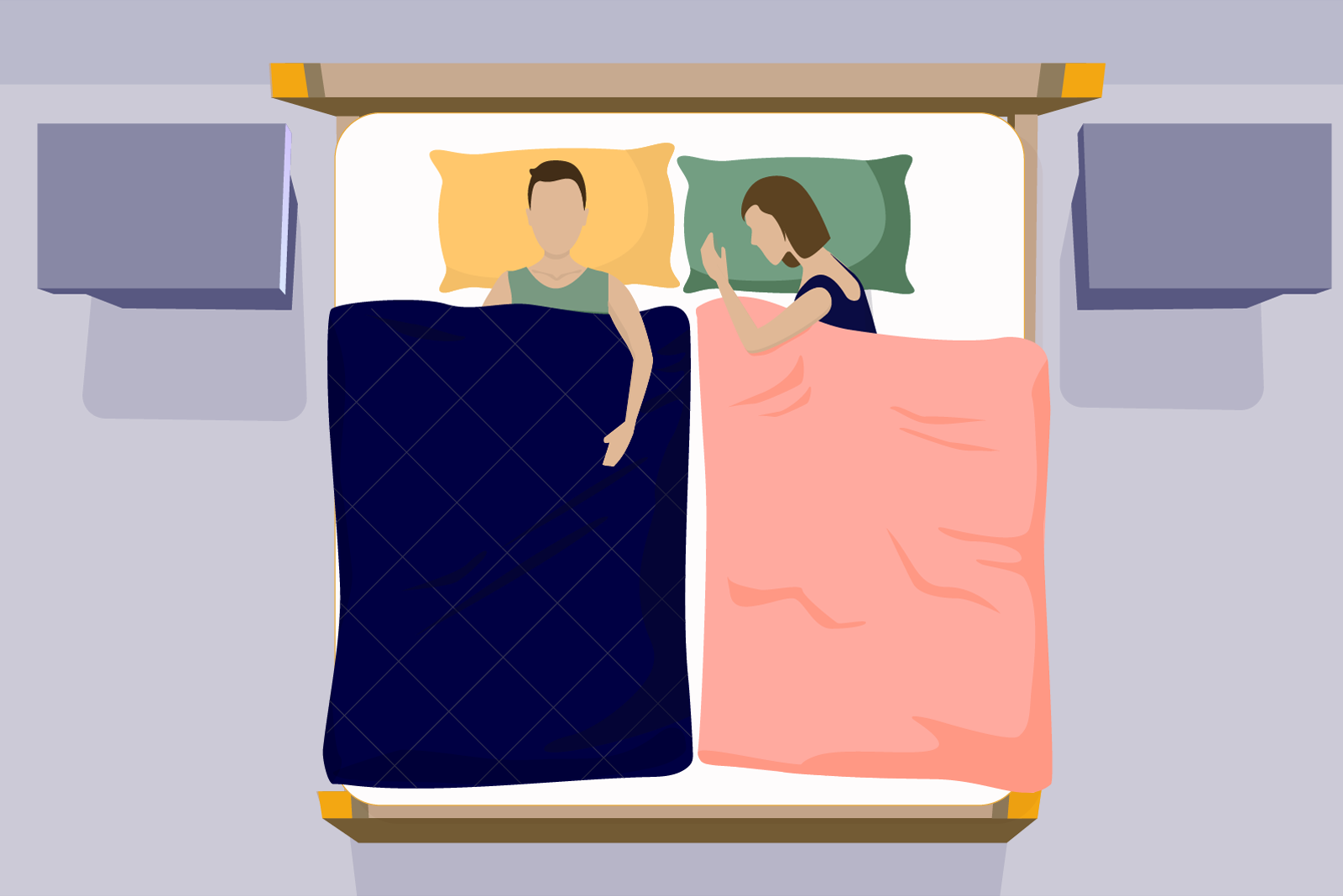
1. Scandinavian Sleep Method
This trending sleep technique is inspired by long-standing Nordic traditions of sharing a bed with your partner while using separate bedding—specifically blankets or duvets.
This together-but-separate sleep hack lets each partner customize their bedding to their preferences while still feeling close to one another. It can be especially helpful when one sleeper runs warmer or cooler than the other. Sleeping with the Scandinavian bedding method might also help put an end to the constant wrestling matches over the comforter.
If you like this idea and want to take it to the next level, you might want to consider a split king mattress. A split king mattress is two twin XL mattresses side by side, each with its own bedding. You can even customize your bed setup by choosing two different mattresses, which is a good option if you and your partner have different firmness or comfort preferences.
2. Try Different Sleep Positions
If you like to cuddle up close to your partner (or pet) each night but wake up feeling tired, it may be time to try a new sleeping position. Creating a bit of space between each person on the mattress can give each one the room they need to spread out and sleep in the position that best suits them.
Still want to feel close to your partner? We get it. Try out different cuddling positions with a little less contact, like a leg hug or hand hold.
3. Upgrade your Mattress
Your mattress is another factor that could be contributing to your struggle for good sleep. Whether you’ve been sleeping on a shaky, creaky bed or you just feel like you’re rolling off to the edge of the mattress throughout the night, you could be due for an upgrade.
People sharing a mattress often benefit from features like strong motion isolation, good temperature regulation, and a balanced level of firmness. Check out our top-ranked mattresses for couples, which are graded based on these features.
Another popular mattress upgrade involves sizing up. A queen size mattress is the most common for Canadian couples, but switching to a king or California king size may create a little more room for comfort.
4. Stop the Snoring
If you or a partner struggles with snoring or sleep apnea to the point of lost sleep, you should consider seeing a doctor or sleep health professional.
One tool that’s shown to help snoring is an adjustable bed frame. This allows the head of one or both partners to be elevated, which helps keep airways open for more silent nights.
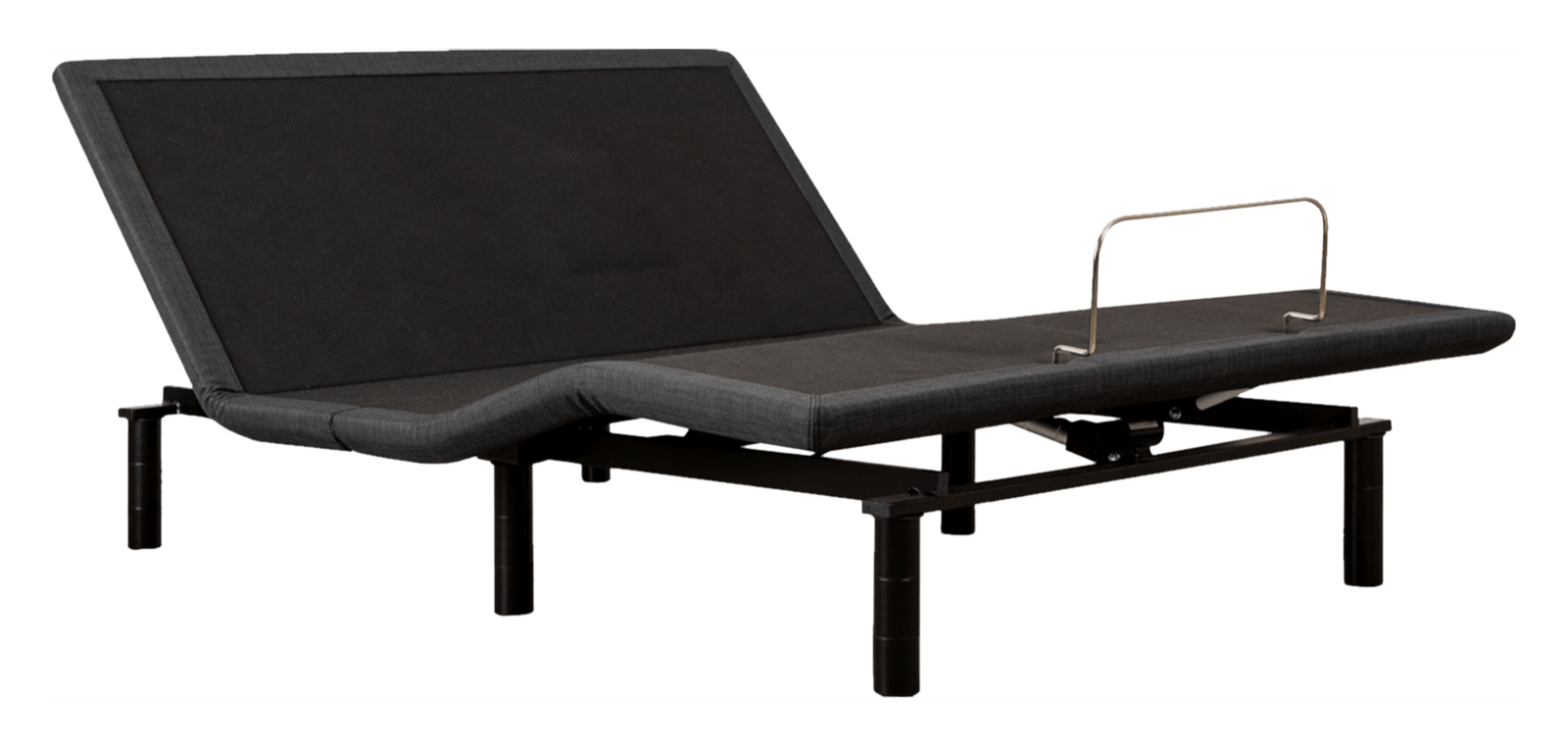
Douglas Adjustable Bed
The Douglas Adjustable Bed is our pick for the best adjustable bed in Canada, according to our accessory scoring methodology that factors in 25+ buying considerations.
5. Sleep Divorce
You might have heard of the term “sleep divorce,” circulating online and on social media. A sleep divorce is a decision by a couple to sleep in separate beds or rooms to improve both partners’ sleep quality. Don’t be scared of the names’ somewhat negative connotation—a sleep divorce can be a healthy and useful tool for couples who are struggling to share the same bed or space.
Getting a better night’s sleep can lead to better moods and, consequently, a healthier relationship. So if sharing a bed is causing stress and restless nights, it’s not a bad idea to sleep in a separate bed from your partner. And if you’ve tried all the above methods to sleep better together to no avail, it might be time to give sleeping apart a try.
Sleep is an important part of our everyday lives and our relationships. But sleeping next to someone isn’t always a dream. It’s important to maintain open communication with your partner to see how you can each best support one another’s sleep for a healthier life and a happier relationship, whether that means switching out the bedding or sleeping a little farther apart.
Prioritizing how you rest together can strengthen your bond and improve your overall well-being, for better nights—and days.
Frequently Asked Questions
Why can’t I sleep next to my partner?
There may be a number of reasons why you’re struggling to sleep next to your partner. Some might include experiencing nighttime disruptions from sleeping next to them, such as noises or movement. You may also be overheating while sleeping next to them, especially if they run hot at night, or even getting too cold when the blanket moves away from you.
It’s always important to express your feelings to a partner if you’re struggling with your sleep, and you may be able to find some solutions to improve both of your sleep.
Is it better to sleep alone or with a partner?
There are arguments for both sides—sleeping with a partner or alone. Some studies show that sleeping next to someone can improve your mental health and sleep quality. However, if sleeping with a partner keeps you up and disrupts your sleep, it may be more beneficial to sleep alone or in separate beds.
Can a couple sleep on a double bed?
While a couple can technically fit on a double bed, it may not be the most comfortable amount of space to spread out, especially if one or both sleepers is taller than average. A double-size bed measures 75″ long by 53″ wide. Double beds are typically best for one full-grown sleeper, or two smaller sleepers, such as children.
READ MORE: What mattress size do I need?
How to sleep with a partner who snores?
There are a few ways to deal with a snoring partner. You can:
- Block out the sound with earplugs. Sleeping with earplugs can alleviate some of the noise disruptions caused by snoring.
- Try a white-noise machine. Like earplugs, having another external sound can help drown out the noise of snoring and help you focus on a different sound to fall asleep.
- Raise the head of the bed. Sleeping in a more upright position can lead to more open airways, which can help alleviate the causes of snoring. Adjustable mattress bases are a great and easy way to achieve an elevated head position. You can even try a split king base and mattress pairing for customized positioning on either side of the bed.
Should couples go to bed at the same time?
You don’t need to go to bed at the same time as your partner, but there can be some benefits. If you’re not working on different schedules that require you to sleep at different times, heading to bed around the same time can:
- Help avoid waking the other up unnecessarily when going to bed later.
- Encourage you to spend more time together, like reading a book or watching a show.
- Sync your sleep routine to a consistent schedule, which is shown to be associated with better sleep quality.
Our goal is to provide the information you need to find the mattress that’s right for you. Get started with some of our most popular mattress shopping resources:
- Best Mattress Guides: Best Mattress Canada, Best Mattress In a Box
- Reviews: Douglas Original, Logan & Cove Choice, Juno, Octave Vista
- Comparisons: Douglas vs Endy, Douglas vs Casper
We use independent, third-party engineering firms (commissioned by us) with the APEGA stamp of approval to conduct mattress testing on our behalf, using publicly available data. We review and test all mattresses on 40+ criteria we think are important to you, including price, country of manufacture, sleep trial, warranty, features, materials used, motion isolation and edge support ratings, customer satisfaction reviews, returns, and refunds.
References:
- Lee, S., et al. (2018). Covariation in couples’ nightly sleep and gender differences. Sleep Health. https://www.sciencedirect.com/science/article/abs/pii/S2352721817302206
- Better Sleep Council. (2017). Survey: American couples have trouble in bed. Better Sleep Council. https://bettersleep.org/research/survey-american-couples-have-trouble-in-bed/
- Sowho, M., Sgambati, F., Guzman, M., Schneider, H., & Schwartz, A. (2020). Snoring: a source of noise pollution and sleep apnea predictor. Sleep. https://doi.org/10.1093/sleep/zsz305
- Mayo Clinic Staff. (2025). Sleep apnea: Symptoms and causes. Mayo Clinic. https://www.mayoclinic.org/diseases-conditions/sleep-apnea/symptoms-causes/syc-20377631
- Fuentes, B., et al. (2022). Bed sharing versus sleeping alone associated with sleep health and mental health. Sleep. https://academic.oup.com/sleep/article/45/Supplement_1/A4/6592562
- Roberts, N. A., Burleson, M. H., Pituch, K., Flores, M., Woodward, C., omaShahid, S., Todd, M., & Davis, M. C. (2022). Affective experience and regulation via sleep, touch, and “sleep-touch” among couples. Affective science. https://doi.org/10.1007/s42761-021-00093-3
- Drews, H. J., et al. (2020). Bed-sharing in couples is associated with increased and stabilized REM sleep and sleep-stage synchronization. Frontiers in Psychiatry. https://www.frontiersin.org/journals/psychiatry/articles/10.3389/fpsyt.2020.00583/full
- Harvard Health Publishing. (2024). REM sleep: What is it, why is it important, and how can you get more of it? Harvard Medical School. https://www.health.harvard.edu/staying-healthy/rem-sleep-what-is-it-why-is-it-important-and-how-can-you-get-more-of-it
- Danoff-Burg, S., et al. (2022). Use of an adjustable bed base improves sleep quality and duration. Sleep. https://academic.oup.com/sleep/article/45/Supplement_1/A154/6592556
- Drews, H. J., et al. (2017). “Are we in sync with each other?” Exploring the effects of cosleeping on heterosexual couples’ sleep using simultaneous polysomnography: A pilot study. Sleep Disorders. https://onlinelibrary.wiley.com/doi/10.1155/2017/8140672
Top Pick 2026
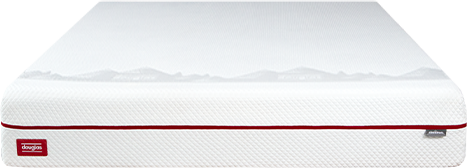
Douglas Original
Best Canadian Foam Mattress
- 365-night sleep trial, 20-year warranty, and free bedding bundle with purchase
- Excellent motion isolation
- Cooling gel foam comfort layer
BETTER SLEEP SALE Buy any Douglas mattress today and get a FREE Comfort Sleep Bundle + Duvet Set, Up to 25% OFF Bed Frames, and 15% OFF All Accessories. See website for details >
Sponsored Ad
Jump ahead:


 Save
Save
Save
Save