Best Sleeping Position For Neck Pain (2026)
Updated: March 5, 2026 | Published: January 21, 2026

Neck pain is one of the most common issues people face at bedtime, and how you sleep can make a big difference. The wrong sleep position or lack of support can put added strain on your neck muscles, making things feel even worse in the morning. But with a proper sleeping position for neck support and other adjustments, the way you sleep could actually help relieve some of that tension.
Experts often recommend sleep positions that keep your cervical spine (the part of your spine that runs through your neck) in a neutral, aligned position. Back and side sleeping tend to be the most comfortable for people with neck pain, especially when paired with the right pillow and mattress setup.
Disclaimer: We co-authored this article with healthcare provider Dr. Greg Stoltz. These suggestions are general tips and may not work for everyone. If you have ongoing or severe neck pain, it’s always a good idea to check with a healthcare professional before making changes to your sleep setup.
Position 1: Sleeping on your back with a supportive pillow
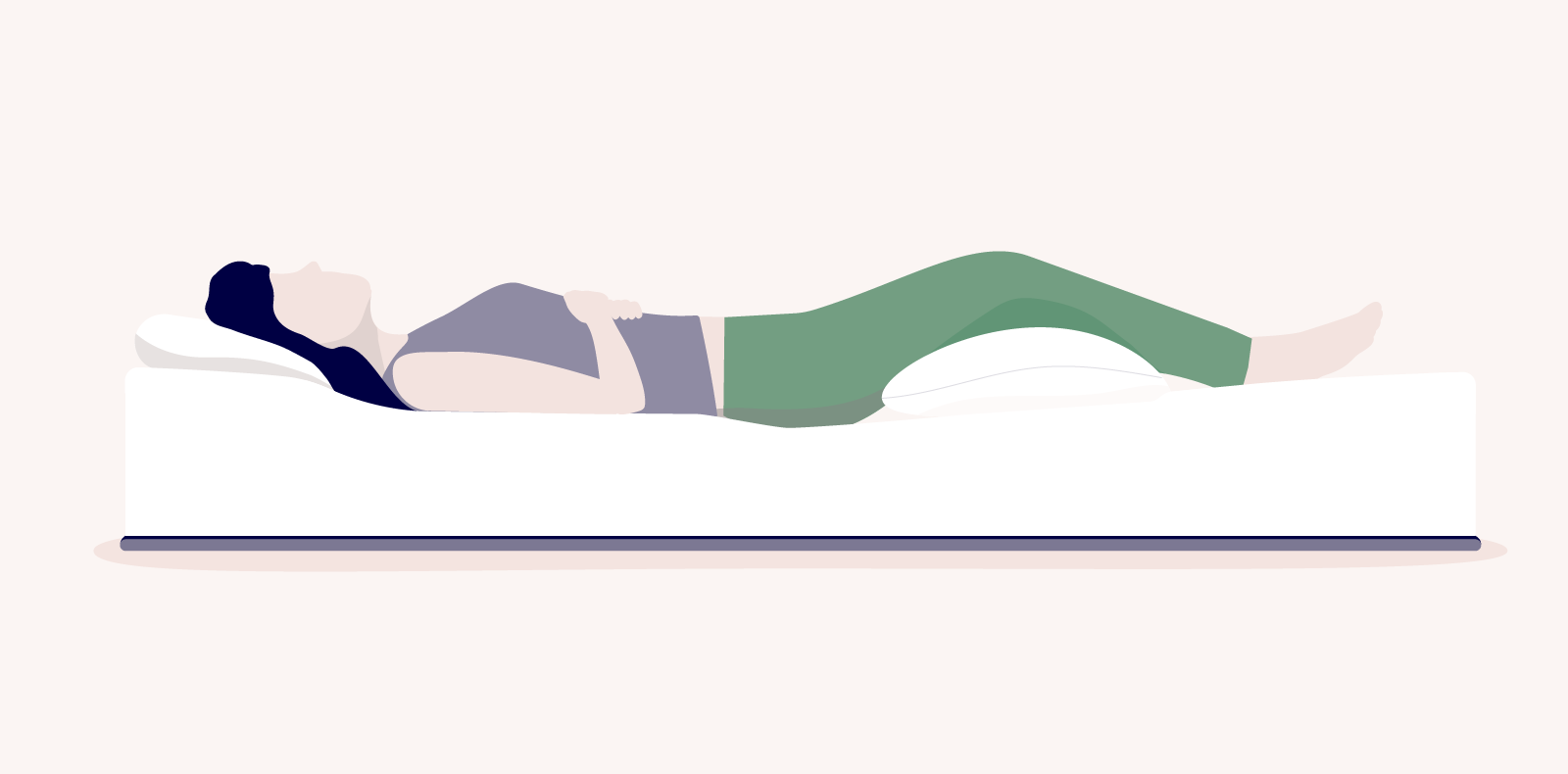
Sleeping on your back can be one of the best positions for relieving neck pain. It keeps your spine in a neutral position and helps keep your head from twisting to either side overnight.
To support your neck, choose a pillow that cradles the natural curve of your neck without pushing your head too far forward. Contoured or adjustable memory foam pillows often work well for this. Your head should feel supported, but not elevated. You can also try placing a second pillow or a small rolled towel under your neck for added support.
If you want more control over your sleeping position for neck pain, an adjustable bed base can help. Raising the head of the bed just slightly can reduce pressure on the neck and shoulders while improving overall comfort.
Dr. Greg’s Tip: |
|---|
If you’re a habitual stomach sleeper, switching positions can take time. Try placing a pillow under one shoulder or along your torso to prevent rolling fully onto your stomach while you sleep on your side. |
Position 2: Sleeping on your side with a supportive pillow
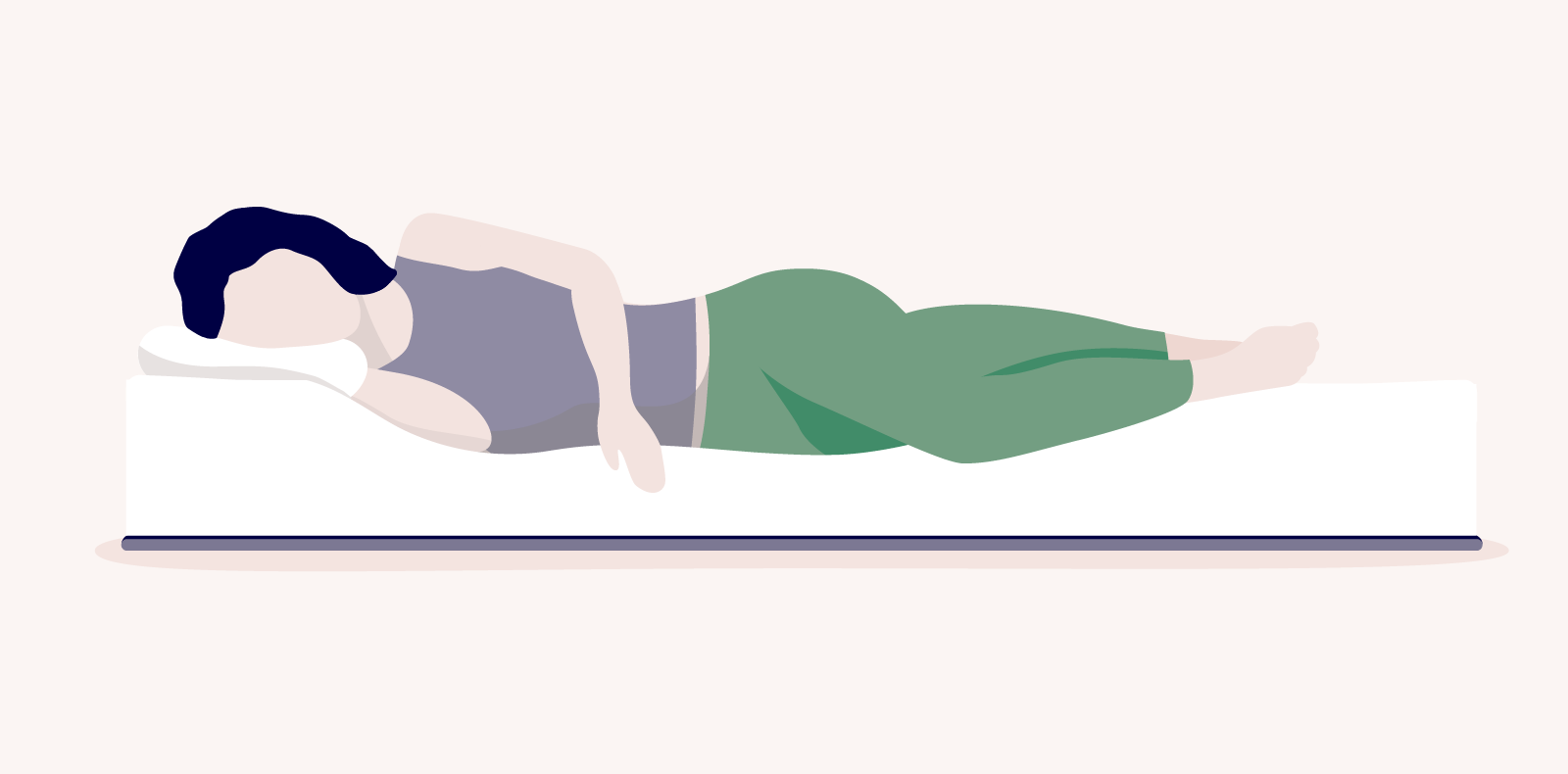
Side sleeping is another position that can work well for neck pain, as long as your pillow supports the space between your neck and shoulder. This helps keep your spine straight and reduces tension that can build up in the neck and upper back.
Look for a medium- to firm-density pillow that keeps your head level with your body. Too much lift or too little support can cause the neck to bend unnaturally, which may make pain worse. You’ll also want a medium-firm mattress that cushions your shoulders and hips without letting you sink in too far. Bonus: Having a properly supportive pillow and mattress for side sleeping will also help decrease your chance of pressure-point buildup.
Position 3: Slightly elevated sleeping position
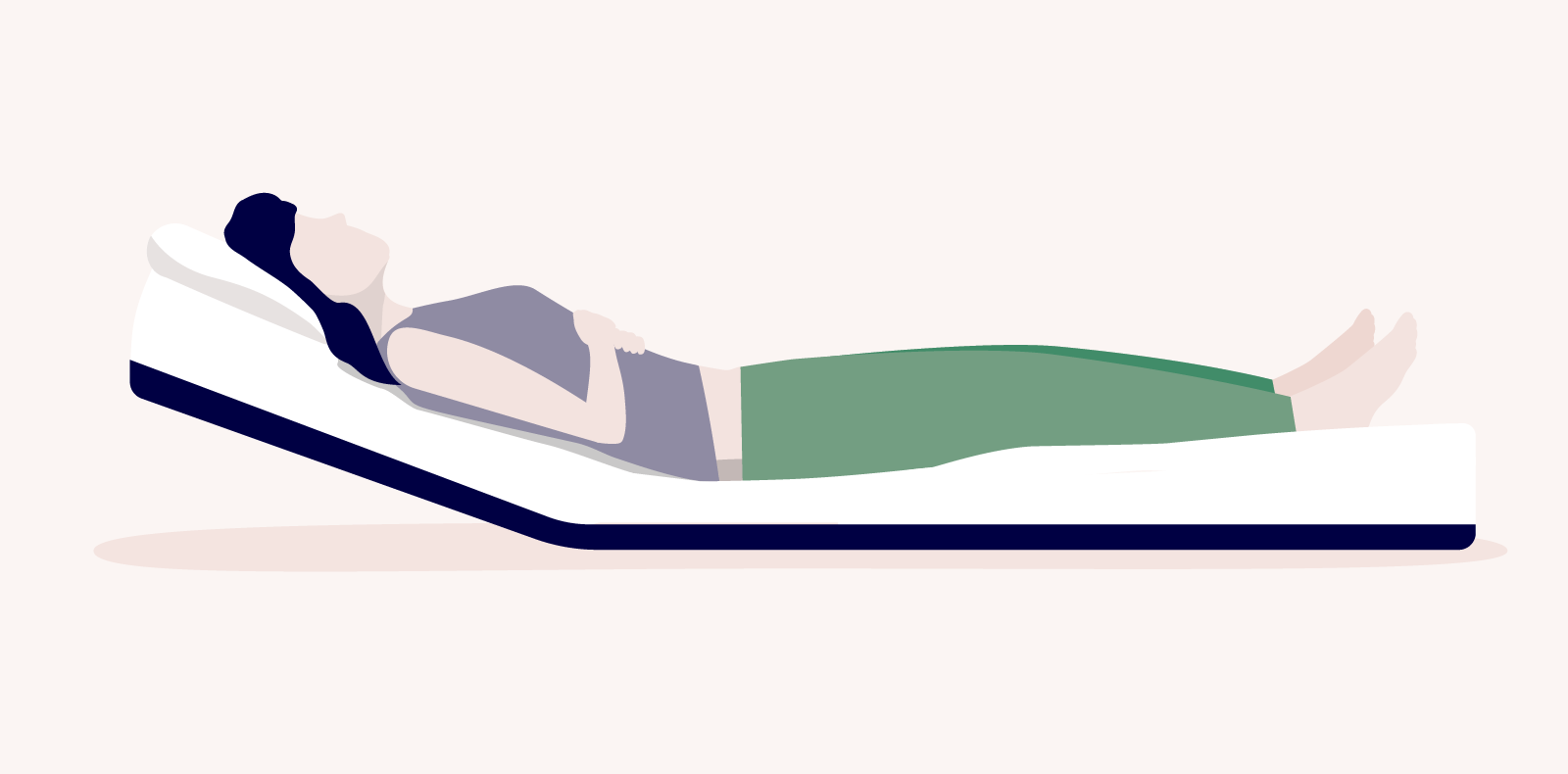
For some people, sleeping in a slightly elevated position can help reduce neck strain. Elevation can ease pressure on the muscles and joints and may help improve circulation overnight.
For some people, sleeping in a slightly elevated position can help ease neck strain, especially if lying flat tends to make stiffness worse. Elevating your upper body can take pressure off the muscles and joints in your neck while also helping with circulation and breathing.
There are different ways to create this kind of support. Some people use extra pillows or a wedge cushion, but these options can shift around during the night. A more stable option is an adjustable bed base that allows you to control the exact angle of elevation.
Adjustable bases like the Douglas Adjustable Bed let you raise the upper portion of your bed to the height that feels most comfortable for your neck and shoulders. This added customization can help you find a position that feels supportive all night long without needing to readjust pillows or props.
READ MORE: Get the list of our top-ranked adjustable beds in Canada
What causes neck pain while sleeping?
Neck pain while sleeping can have a few different causes, such as:
- A pillow or mattress that doesn’t offer enough support
- Sleeping in an awkward position
- Muscle strain from daytime movement
- Habitual slouching while sitting or standing
- Medical issues, such as arthritis or stress
Why does sleep position matter for neck pain?
Your sleep position can influence how your neck feels in the morning, especially if your spine isn’t aligned properly while you sleep. For example, sleeping on your stomach often requires turning your head to the side for long stretches, which can strain the neck over time.
Side and back sleeping are generally more gentle on the neck, but only if your pillow and mattress offer enough support. If your mattress is too firm or too soft for your sleeping position, it could push your head and neck into an unnatural angle. Likewise, the loft and density of your pillow also play a role in helping you maintain a comfortable and ergonomic position throughout the night.
Over time, nightly misalignment can lead to stiffness, compressed nerves, and joint pain, or worsen existing neck pain. Choosing a sleep setup that supports your natural posture can help reduce pressure and make a difference in how your neck feels each morning.
Dr. Greg’s Tip: |
|---|
You might benefit from placing a small rolled-up towel beneath the low back area. This may help maintain the natural curve of your lower back. |
What sleeping positions should people with neck pain avoid?
If you’re dealing with neck pain, it’s usually best to avoid sleeping on your stomach. That position often forces your neck to twist to one side, which can add strain and make pain worse over time. It can also throw off the natural alignment between your head, neck, and spine.
Instead, try sleeping on your back or side with a supportive pillow that keeps your neck in a neutral position. These positions are generally easier on the neck, especially when paired with a mattress like Octave Mirage that has zoned support to promote proper spinal alignment.
What are some tips for preventing neck pain at night?
Proper sleep posture is the best way to prevent neck pain at night. Keep your spine in a neutral position while you sleep, and use a supportive pillow that holds your head level (not too high and not too low). This helps reduce strain and keeps your neck in line with your back.
Your mattress and finding the right firmness that works for your needs matters, too. If it’s too soft or too firm for your sleep style, it might cause your neck or shoulders to fall out of alignment. Side and back sleepers generally do best with a medium or medium-firm mattress that cushions pressure points while keeping the spine straight.
Dr. Greg’s Tip: |
|---|
Sleep setup matters, but neck health also depends on daily movement, posture, and load tolerance. Improving sleep comfort works best when paired with staying active and addressing daytime habits. |
Our goal is to provide the information you need to find the mattress that’s right for you. Get started with some of our most popular mattress shopping resources:
- Best Mattress Guides: Best Mattress Canada, Best Mattress In a Box
- Reviews: Douglas Original, Logan & Cove Choice, Juno, Octave Vista
- Comparisons: Douglas vs Endy, Douglas vs Casper
We use independent, third-party engineering firms (commissioned by us) with the APEGA stamp of approval to conduct mattress testing on our behalf, using publicly available data. We review and test all mattresses on 40+ criteria we think are important to you, including price, country of manufacture, sleep trial, warranty, features, materials used, motion isolation and edge support ratings, customer satisfaction reviews, returns, and refunds.
References:
- Publishing, Harvard Health. “Say “Good Night” to Neck Pain.” Harvard Health, 2 Feb. 2022, www.health.harvard.edu/pain/say-good-night-to-neck-pain.
-
Lei, Jia-Xing, et al. “Ergonomic Consideration in Pillow Height Determinants and Evaluation.” National Library of Medicine, vol. 9, no. 10, 7 Oct. 2021, p. 1333, https://doi.org/10.3390/healthcare9101333.
Best Sleep
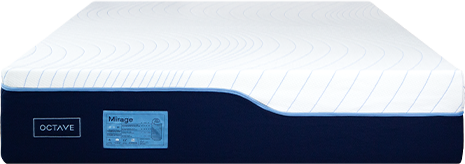
Octave Mirage
Our Top Pick For a Good Night’s Sleep
- 365-night sleep trial and 15-year warranty
- Advanced cooling features and five-zoned support system
- Free bedding bundle with purchase
BETTER SLEEP SALE Get a FREE Comfort Sleep Bundle + Duvet Set with every mattress purchase, Up to 25% OFF Bed Frames, and 15% OFF All Accessories. See website for details >
Sponsored Ad
Jump ahead:


 Save
Save
Save
Save