- 365-night sleep trial, 15-year warranty, and free bedding bundle with purchase
- Excellent motion isolation
- Cooling gel foam comfort layer
Mattress reviews of Canada’s top brands
Mattress shopping shouldn’t feel like guesswork. Online, you’re choosing where you’ll spend a third of your life based on photos and marketing copy. In-store, you get a few minutes under fluorescent lights while a commissioned salesperson watches you decide—hardly a real test of eight hours of sleep.
MattressReviews.ca closes that gap. We’ve tested 120+ mattresses against the same criteria (firmness, edge support, motion isolation, bounce) using commissioned, APEGA-certified third-party engineers. Our overall ratings roll up 40+ scoring criteria for each model, so you can compare brands head-to-head and find what actually fits the way you sleep.
See the top-rated mattresses What to Look for in a Mattress
Explore the mattress industry’s leading brands.



 Endy
GhostBed
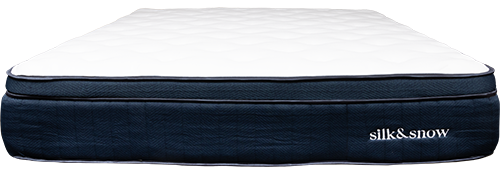
Silk & Snow
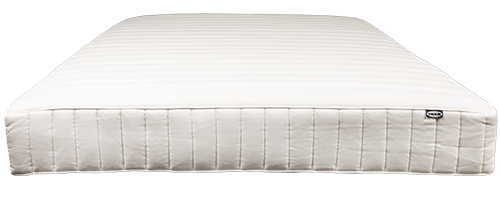
IKEA
Stearns & Foster
Helix
TEMPUR-Pedic
Casper
Amerisleep
Avocado
Bear
Beautyrest
BedStory
Bloom
Crystli
Dauphin
Dormeo
Dreamstar
DreamCloud
Emma
Essentia
Hamuq
Haven
Hush
Kingsdown
Layla
Leesa
Leon's
Loop
Lucid
Molblly
Nectar
Nolah
Novaform
Polysleep
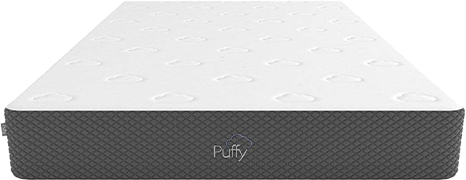
Puffy
Purple
Saatva
Sea Horse
Sealy
Serta
Simba
Simmons
Springwall
Structube
Tuft and Needle
Wayfair
Zinus
Best Mattresses in Canada at a Glance
Top Pick 2026
Made In

The manufacturing origin listed here is based on the law label of the specific mattress we tested. Learn more >
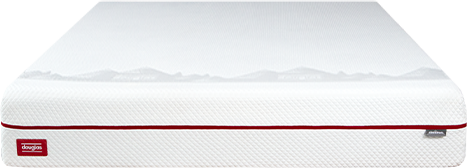
Douglas Original
Best Canadian Foam Mattress
Queen
$799
FALL SAVINGS EVENT ON NOW!
Buy any Douglas mattress today and get a FREE Comfort Sleep Bundle + Duvet Set, 20% OFF Adjustable Beds, and 15% OFF All Accessories.
See website for details >
Best Sleep
Made In
The manufacturing origin listed here is based on the law label of the specific mattress we tested. Learn more >
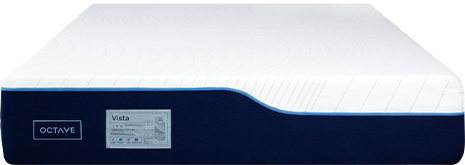
Octave Vista
Our Top Pick For a Good Night’s Sleep
- 365-night sleep trial and 15-year warranty
- Advanced cooling features and five-zoned support system
- Advanced memory foam for soothing pressure relief
Queen
$1,099
FALL SAVINGS EVENT ON NOW!
Get a FREE Premium Sleep Bundle + Duvet Set with every mattress purchase, 20% OFF Adjustable Beds, and 15% OFF All Accessories.
See website for details >
Best Luxury Hybrid
Made In
The manufacturing origin listed here is based on the law label of the specific mattress we tested. Learn more >
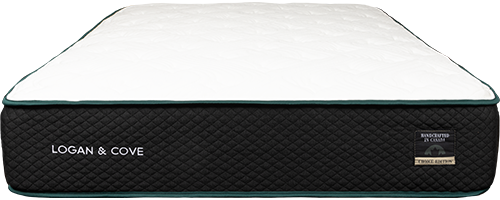
Logan & Cove Choice
Our Pick for Best Luxury Hybrid Mattress
- 365-night sleep trial and 15-year warranty
- Zoned support and advanced cooling features
- Free bedding bundle with purchase
Queen
$1,199
FALL SAVINGS EVENT ON NOW!
Enjoy a FREE Premium Sleep Bundle + Duvet Set with any mattress purchase, 20% OFF Adjustable Beds, and 15% OFF All Accessories.
See website for details >
Best Value Foam
Made In
The manufacturing origin listed here is based on the law label of the specific mattress we tested. Learn more >
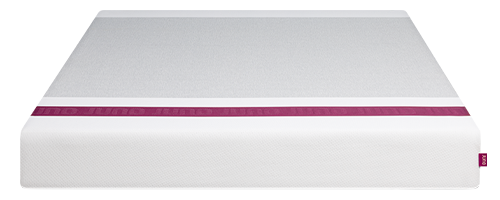
Juno
Best Canadian Value Foam Mattress
- 120-night sleep trial and 15-year warranty
- Prices as low as $449
- Comes with a free bedding bundle with a sheet set, pillow(s), and a mattress protector
Queen
$549
FALL SAVINGS EVENT ON NOW!
Get a FREE Sleep Bundle with every mattress purchase, 20% OFF Adjustable Beds and 15% OFF All Accessories.
See website for details >
Hamuq
Made In
The manufacturing origin listed here is based on the law label of the specific mattress we tested. Learn more >
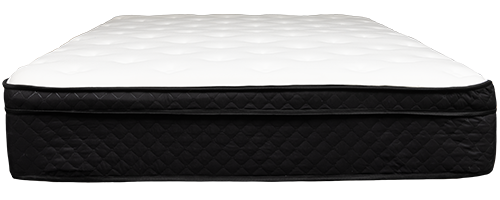
Original Hamuq Hybrid
Hybrid Mattress Made in Canada
- Cooling gel layer
- Wrapped pocket coils and zoned support
- 120-night sleep trial
Queen
$999
Endy
Made In
The manufacturing origin listed here is based on the law label of the specific mattress we tested. Learn more >
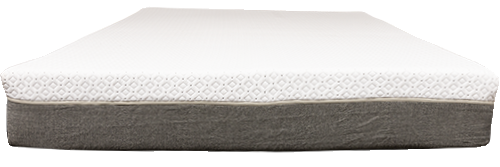
The Endy
All-Foam Canadian Mattress
- Three individual foam layers for comfort and support
- Machine-washable mattress cover
- Owned by Sleep Country
Queen
$895
Down to two mattresses and still not sure? Top Mattress Comparisons
When both options look great on paper, the real differences are easy to miss. We put the big names side by side and break down every rating criteria so you can see exactly where they diverge and which one actually fits how you sleep.

What to Look for in a Mattress
There are five measurable factors that can help you decide if a mattress is suitable for you. We consider each factor when testing and ranking mattresses. They include:
1. The correct firmness for your sleeping position
Different sleep positions require different levels of support. Side sleepers need their shoulders and hips to sink in, while back and stomach sleepers need their lumbar area supported. The most common reason a mattress fails is due to the wrong firmness. To assess firmness accurately, we measure sink depth with a 170-lb mannequin rather than relying on a brand’s description. That measurement is the Firmness score.
2. Stable edge support
Weak edge support reduces your sleeping area and makes sitting on the side of the bed feel unstable. It matters more on smaller sizes, for couples, and for heavier sleepers. Engineers load points around the entire perimeter to produce the Edge Support score.
3. Minimal motion transfer and sleep disturbance
If one partner turns over or gets out of bed, the other should not feel it. Foam mattresses typically absorb more movement than bouncy hybrids. However, this trade-off can affect how easily you can change positions. Both aspects are measured, as Motion Isolation and Bounce.
4. Temperature regulation
Dense comfort layers can trap body heat. Features like gel infusions, breathable covers, and open coil layers help dissipate heat, which is why two mattresses with the same firmness can feel very different in terms of temperature regulation. We record what each build actually uses under Cooling Features.
5. After-sales service and policies
It takes at least weeks to properly assess a mattress. Factors like trial length, return and pickup fees, warranty terms, and the mattress’s construction determine the cost of a wrong choice and the longevity of a right one. These terms are scored as Offering and Construction, alongside the brand’s Company Reputation.
Tested by licensed engineers, not by us.
MattressReviews.ca commissions licensed third-party engineers and uses public data to rate mattresses on over 40 criteria.
This allows us to accurately rate and compare the performance of the mattresses reviewed on this website. Engineer independence and operating standards help ensure their results remain unbiased, valid, and reliable.
Each mattress was evaluated using the same strict mattress testing methodology to protect the overall integrity of the results. Foam and hybrid mattress test results are scored on separate scales to ensure fair contextual performance representation as much as possible. The full report has been given the official stamp of approval from an APEGA-certified engineer operating under a strict ethical code of conduct.
Mattress testing conducted outside of this professional standard poses a greater risk of validity errors or reviewer bias.

Firmness
Our third-party engineers use a 170 lb mannequin to simulate the weight distribution of the average human body. To test for firmness, engineers place the mannequin in the middle of the mattress and measure how far down it sinks. The deeper the mannequin sinks, the softer the mattress is.
Firmness is a matter of personal preference as a sleeper, so we don't have an "average" rating for this category. However, we still rate firmness on a scale of 1–10.

Edge Support
Edge support determines how supportive the mattress is when you're sitting on or lying close to the edge. For testing purposes, engineers place a 170 lb mannequin at various edge points along the perimeter of the mattress. If there is a low degree of sinking, the mattress has high edge support. If there is a high degree of sinking, the mattress has low edge support.
On a scale of 1–10, we consider an edge support score of 5.0+ to be an average rating.

Motion Isolation
This is how much you'll feel your partner's movements (or vice versa) while you're lying on the mattress. To test this, engineers drop a 10-pound medicine ball onto the top of the mattress. An accelerometer then measures the vibrations created by the impact. Lower vibrations mean a higher motion isolation score, while higher vibrations translate to a lower score.
On a scale of 1–10, we consider a motion isolation score of 5.0+ to be an average rating.

Bounce
Bounce is defined by how much the mattress gives way when you lie on it, and how much it pushes back against sudden body motion. Engineers test this by dropping a 10-pound medicine ball from a fixed point, and measuring the initial bounce after it rebounds against the mattress. The higher this first bounce is, the higher the score.
Bounce is a matter of personal preference as a sleeper, so we don't have an "average" rating for this category. However, we still rate bounce on a scale of 1–10.
The rest of the 40+ criteria
Company Policies
What you actually get for your money, scored on published terms rather than marketing claims: queen price, whether the model is in stock across Canada, trial length, who pays for shipping and returns, and warranty coverage.
- Price
- Availability
- Sleep trial
- Shipping & returns
- Warranty
Mattress Construction
Where the mattress is made, whether its foams carry CertiPUR certification, how many comfort and support layers it uses, and the specific components inside each one.
- Country of origin
- CertiPUR-US® certified
- Number of layers
- Components
Company Reputation
Third-party signals on the brand behind the mattress: Better Business Bureau rating, Trustpilot score, and the volume of customer reviews behind that score.
- BBB rating
- Trustpilot score
- Number of reviews
Cooling Features
Cooling technologies present in the build — gel or graphite infusions, phase-change covers, breathable coil layers and airflow channels — recorded and scored per mattress.
- Cooling Technologies and Infusions
- Mattress Construction Materials
- Mattress Cover Technology
- Mattress Cover Fabrics
Our highest-scoring mattresses, always at a great price.
Douglas Original
Queen
$799
FALL SAVINGS EVENT ON NOW! Buy any Douglas mattress today and get a FREE Comfort Sleep Bundle + Duvet Set, 20% OFF Adjustable Beds, and 15% OFF All Accessories. See website for details >
Logan & Cove Choice
Queen
$1,199
FALL SAVINGS EVENT ON NOW! Enjoy a FREE Premium Sleep Bundle + Duvet Set with any mattress purchase, 20% OFF Adjustable Beds, and 15% OFF All Accessories. See website for details >
Juno
Queen
$549
FALL SAVINGS EVENT ON NOW! Get a FREE Sleep Bundle with every mattress purchase, 20% OFF Adjustable Beds and 15% OFF All Accessories. See website for details >
Find the right mattress based on your specific needs.